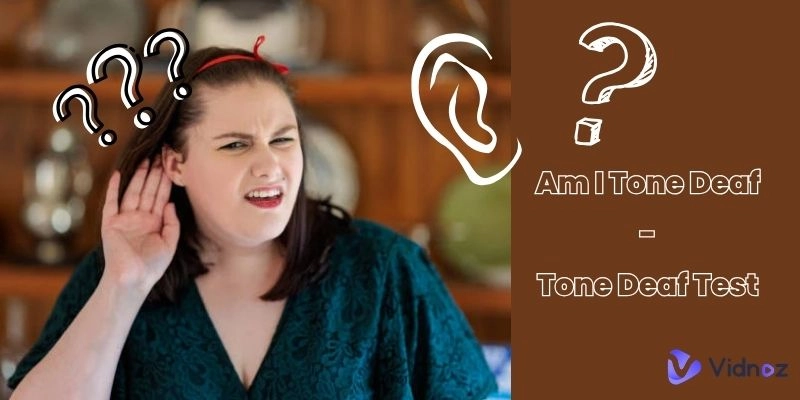
Are you looking for a reliable am I tone deaf test online? If you find it hard to match notes or recognize songs, you might wonder if it's a real issue or just a lack of practice. The good news is, you can take a tone deaf test online and find out in minutes.
These tests check how well you hear pitch and tell you if you're truly tone deaf or just need more training. In this guide, you'll learn about the best tone deafness tests, how to understand your results, and easy ways to improve, even if you think you can't sing!
So, let's get started.
- On This Page
-
-
Take the Quick Online Tone Deaf Test - Top 3 Rated Tests
The Music Lab Tone-Deafness Test
-
Interpret Your Results: Are You Tone Deaf?
-
Tone Deafness Tests vs. Clinical Diagnosis
-
Tips to Improve Pitch Recognition
-
Bonus: Create Original Songs With Free AI Music Generator [No Talent Required]
How to Create AI Music with Vidnoz
-
FAQ about Tone Deaf Test
Q: How do I find out if I'm tone deaf?
Q: What is the tone deaf sound test?
Q: Are you tone deaf if you can't sing?
Q: How rare is being tone deaf?
Take the Quick Online Tone Deaf Test - Top 3 Rated Tests
If you are looking for "am I tone deaf test", these three easy online tone deafness tests are highly rated and worth trying:
-
ToneDeafTest.com

ToneDeafTest.com is a straightforward online test designed to evaluate your pitch sensitivity by playing pairs of tones. You need to decide if the tones are the same or different, which helps determine whether you have basic pitch perception abilities or tone deafness. This tone deafness test provides immediate results based on accuracy and is easy to use.
Best for: Casual users and beginners looking for a quick check of basic pitch perception skills.
Link > https://tonedeaftest.com/
-
The Music Lab Tone-Deafness Test

Developed by Harvard's Music Lab, this test offers a scientifically rigorous evaluation of pitch discrimination. It plays pairs of tones with progressively smaller pitch differences, asking if the second tone is higher or lower. This tone deafness test quantifies your pitch sensitivity and compares it against a broad participant base for benchmarking.
Best for: This deaf tone test is suitable for musicians or those wanting an in-depth, scientific analysis of their tone perception.
Link > https://www.themusiclab.org/quizzes/td
-
Tone Deaf Test App

Tone Deaf Test app is an interactive iPhone/iPad application based on the ToneDeafTest.com framework. It offers a convenient, quick three-minute test to identify tone deafness. This tone deafness test app also provides educational content and tips to help users improve their pitch awareness.
Best for: With sharing features and an engaging interface, this deaf tone test is ideal for mobile users, learners looking for guidance, and people who want instant, accessible testing and feedback on the go.
Interpret Your Results: Are You Tone Deaf?
Once you finish an online tone deaf test, you'll get a score that shows how well you hear pitch.
When using ToneDeafTest.com, your score shows how well you detect pitch differences. A high score means strong pitch perception, while anything below 70% may point to some tone deafness. This test gives instant feedback, so you'll know right away.

The Music Lab Tone-Deafness Test provides a deeper look. It compares your ability to recognize pitch changes, from big jumps to very small differences, with typical listener scores. Lower scores suggest more difficulty in pitch discrimination.

The Tone Deaf Test App is fast and simple. It gives you a quick score and tells you if you're likely tone deaf, along with tips to improve. However, it's less detailed than academic tests.

Understanding your deaf tone test results can guide whether you just need practice or should consider a professional evaluation.
Tone Deafness Tests vs. Clinical Diagnosis
Tone deafness tests available online or as apps are quick, self-administered tools measuring pitch perception through simple tasks like identifying tone differences. These tests offer immediate feedback and are practical for an initial assessment of pitch discrimination abilities. These deaf tone tests suit casual users, music learners, and enthusiasts who want to gauge their musical ear without clinical involvement.

Image from elehear.com
Clinical diagnosis, on the other hand, is conducted by audiologists or ENT specialists using comprehensive methods such as pure-tone audiometry, tuning fork tests, and the Montreal Battery of Evaluation of Amusia. These tests assess neurological and auditory processing in detail, diagnosing conditions like amusia or hearing impairments.
Clinical diagnosis is appropriate for individuals with persistent difficulties or suspected serious tone deafness, offering medical evaluation and possible treatment.
For mild concerns or curiosity, online tests are suitable. But if tone deafness affects daily life or creates frustration, seeking professional clinical diagnosis and intervention is crucial for timely management and improved outcomes.
Vidnoz AI - Create Free Engaging AI Video with Talking Avatar
- Easily create professional AI videos with realistic avatars.
- Text-to-speech lip sync voices of different languages.
- 2800+ video templates for multiple scenarios.
Tips to Improve Pitch Recognition
Even if your tone deafness test results weren't great, don't worry, most people can improve their pitch sense with consistent practice. Tone deafness often stems from lack of training rather than a permanent inability.
- Practice with a piano or keyboard: Play a single note on a piano and try to hum or sing the exact pitch. Repeat several times until your voice matches the sound. This simple exercise helps strengthen your ear-muscle connection.
- Use ear training apps: Apps like Tenuto or EarMaster provide structured exercises to recognize intervals, chords, and tones. Daily practice with these tools gradually improves your ability to hear pitch differences accurately.

Image from musictheory.net
- Sing with a tuner: Use a tuner app to check if you are hitting the correct note. When the app shows you're sharp or flat, adjust until the needle is centered. This builds pitch accuracy over time.
- Listen actively: Choose your favorite songs and hum along while focusing on staying in tune. Active listening and singing along to different melodies improves pitch recognition naturally without feeling like a chore.
- Record and review: Record yourself singing a melody, then compare it to the original track. Noticing where you drift off-pitch allows you to adjust and improve consistently through self-awareness.
Bonus: Create Original Songs With Free AI Music Generator [No Talent Required]
AI-instrumental music means using artificial intelligence to compose and play music, even if you don't know how to read notes or play an instrument. These tools analyze patterns, sounds, and structures from large music libraries to create original instrumentals that sound professional. They're fast, accessible, and let anyone experiment with music creation without needing training.
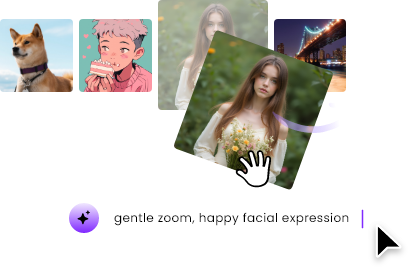
Vidnoz Free AI Music Generator
Free to generate & download for commercial use!
- 100+ combinations of musical styles, moods and themes
- Turn your texts into songs and music videos
- AI to create an original song with your lyrics
Create Music with AI
You don't need musical talent to get started. AI composers help you bring ideas to life, just type a description, pick a mood, and the tool generates a track. That's where Vidnoz AI Music Generator comes in. It's a free tool that creates unique, royalty-free music from your text or prompts in seconds. It supports multiple genres and high-quality output, and you can use it for videos, ads, games, or just your own projects.
How to Create AI Music with Vidnoz
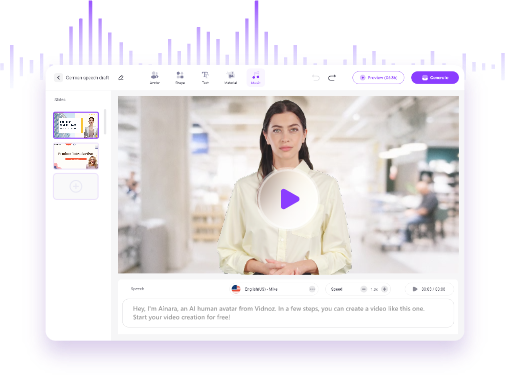
Step 1. Visit the Vidnoz AI website, then navigate to Music Generator page and type in a lyrics prompt. After that, describe the kind of music you want in Music Style section, like "relaxing piano melody" and select the Genre.

Step 2. Click the button to generate music. The AI composes your track instantly.

Step 3. Download the music file and use it however you like, as background music, a ringtone, or part of your next project.
With Vidnoz, you can make original music in moments, perfect even if you've just taken an am I tone deaf test and still want to express yourself musically.
FAQ about Tone Deaf Test
Q: How do I find out if I'm tone deaf?
You can find out by taking an online tone deaf test that plays a series of notes, asking you to identify differences in pitch and tone accuracy.
Q: What is the tone deaf sound test?
A tone deaf sound test evaluates your pitch recognition by playing two notes or short melodies and asking if they sound the same or different musically.
Q: Are you tone deaf if you can't sing?
Not always. Many people who cannot sing well are not tone deaf; they often lack vocal training or experience rather than true pitch recognition ability.
Q: How rare is being tone deaf?
Tone deafness is rare, affecting about 4% of people worldwide. Most individuals can improve their pitch perception significantly through consistent listening exercises and vocal training practice.
The Bottom Line
Knowing if you are tone deaf is the first step to getting better at music. Deaf tone test tools like ToneGym, Jakub Marian, and Musical U make it easy to check your pitch sense online. If you find you struggle with pitch, don't worry, you can improve with practice and listening exercises.
Want to take the next step? Try Vidnoz AI Music Generator. It lets you make your own songs without needing music skills. Turn your ideas into great tunes in just a few clicks today!



![Best AI Music Video Editor for Eye-Catching MV Creation in 30 Secs [Ultimate Guide 2026]](https://www.vidnoz.com/bimg/ai-music-video-editor.webp)