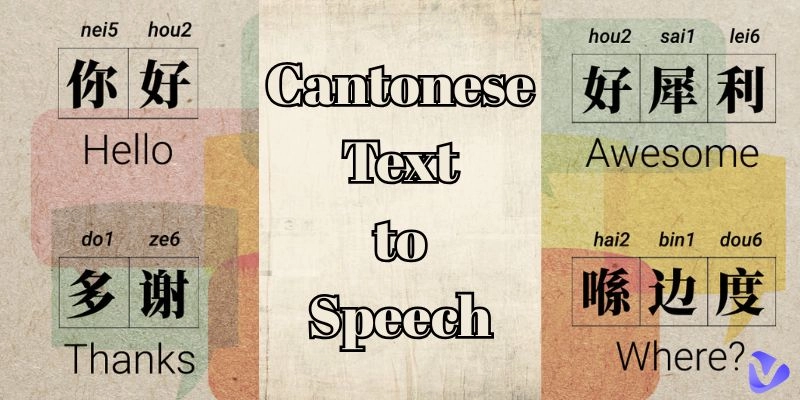
Creating Cantonese voice overs and learning the language is tough. Cantonese's tone complexity and limited digital use hamper it as a lingua franca. Most Cantonese text to speech tools are not natural enough or pronounce it incorrectly. Because of this, content creators and language learners and even businesses find it hard to get a reliable solution.
The correct tool will be able to handle the bare tones of Cantonese and produce natural sounding and clear audio. There are now several places online for good Cantonese text to speech. This article highlights six excellent programs, including free and AI options, to help users create accurate and natural Cantonese voice overs easily.
- On This Page
-
-
Raising Need of Cantonese Text to Speech
-
3 Types of Cantonese Text to Speech Solutions
-
Best 6 Free Online Text to Speech Cantonese Platforms [Pros, Cons & Pricing]
Vidnoz AI: Free AI Cantonese Text to Speech With Lip Sync Video
Cantonese.AI: Specialized Tool For Natural, Authentic Cantonese AI Voice
ReadSpeaker: Enhanced AI Cantonese TTS for Accessibility & Learning
Narakeet: Fast, Affordable, Realistic Online Cantonese Text to Speech
Speechactors: High-Quality Traditional Cantonese TTS, No Limits
VEED's AI Speech-to-Text: Transcribe Cantonese Speech to Text
Raising Need of Cantonese Text to Speech
The need for reliable Cantonese text to speech solutions continue to grow as more people recognize the language’s unique challenges. Cantonese is harder than other languages. This makes TTS Cantonese technology highly valuable for students, companies, and other content creators.
- Tonal complexity with six to nine tones: The tones of Cantonese (six to nine, depending on the variant) make it very difficult for standard speech systems to achieve good results. A single word can mean completely different things depending on the tone of voice. In this regard, AI Cantonese voice technology must be carefully designed to handle these tones.
- Lack of standardized written-spoken mapping: One more challenge arises because formal written and spoken Cantonese don’t have a clear match. Basic speech to text software convert Cantonese poorly. Many phrases which don't match their written form (eg, “Give me a call” ) would probably confuse it.
- Limited high-quality training datasets available: Compared to dominant languages, high-quality voice datasets for Cantonese is scarce. Because of the lack of data, it is more difficult to develop options for Chinese text to speech Cantonese free that sound natural.
- Homophones increase pronunciation ambiguity: Words that sound alike but have different meanings are called homophones. They are found in language often. As a result, additional difficulty is created for Cantonese text to speech systems to decide pronunciation from a written text.
3 Types of Cantonese Text to Speech Solutions
There are 3 styles of Cantonese text to speech solutions for different needs. Depending on the requirements and technical specifications, various methods deliver varied advantages. The three main categories serve different functions to assist in converting written Cantonese into natural speech.
|
|
Description
|
Pros
|
Best For
|
|
Online Cantonese TTS Tools
|
Web-based services that convert text to speech through a browser interface
|
No installation needed, accessible from any device, often free options
|
Quick conversions, casual users, those needing occasional Cantonese TTS
|
|
AI Cantonese TTS Generator
|
Advanced systems using AI to produce natural speech
|
High-quality output, customizable voices, improved pronunciation
|
Content creators, businesses, professional applications
|
|
Offline TTS Software
|
Installed programs that work without internet connection
|
Works offline, better privacy, consistent performance
|
Users with limited internet, security-conscious organizations
|
Best 6 Free Online Text to Speech Cantonese Platforms [Pros, Cons & Pricing]
-
Vidnoz AI: Free AI Cantonese Text to Speech With Lip Sync Video

Vidnoz AI Text to Speech revolutionizes Cantonese text to speech by combining voice generation with video creation, offering a complete multimedia solution. Vidnoz offers text to speech Cantonese video production along with audio output. This makes it a leader in the industry. The platform supports multiple languages, including authentic Chinese (HK) Cantonese. This makes it extremely useful for content creators because they may not simply need an audio file. Using AI-powered avatars that lip sync in a realistic way, you can create professional-looking videos quickly and easily!

Vidnoz AI - Create Free Engaging AI Video with Talking Avatar
- Easily create professional AI videos with realistic avatars.
- Text-to-speech lip sync voices of different languages.
- 2800+ video templates for multiple scenarios.
Key Feature
- AI Cantonese voice is natural and the tones are correct.
- Available to choose from several Chinese avatar presenters, change Cantonese speaking styles, and modify background visuals.
- Available to edit the video, add text, music, and other elements to AI video.
Pros
- Combines TTS with complete video production
- Most realistic lip-syncing avatars available
- Multiple Cantonese voice options with tone accuracy
- Built-in video editor with premium features
- Free tier offers full functionality (5-min videos)
Cons
- Watermark on free version outputs
Pricing: Vidnoz text to speech is free to use.
How to Use:
Step 1. Visit this free AI video generator website, create your account and navigate to Vidnoz AI text-to-speech page.
Step 2. Search ‘cantonese’ in the left search mene, listen to each voice and choose your favorite one.

Step 3. Type or paste your Cantonese script into the text box.
Step 4. Adjust voice parameters (speed, pitch) as needed.
Step 5. Preview the output and make any necessary adjustments, click ‘Generate Audio’ if you are satisfied with the voice.
Step 6. Download the final video or share directly to social platforms.
-
Cantonese.AI: Specialized Tool For Natural, Authentic Cantonese AI Voice

Cantonese.AI focuses exclusively on delivering the most authentic Cantonese text to speech experience available. This specialized platform was created specifically to overcome the difficulties of Cantonese speech synthesis. Most text-to-speech Cantonese tools are just generic text-to-speech tools with a language option added to it. In contrast, Cantonese.AI was built from the ground up with a focus on Cantonese pronunciation rules and tonal accuracy.
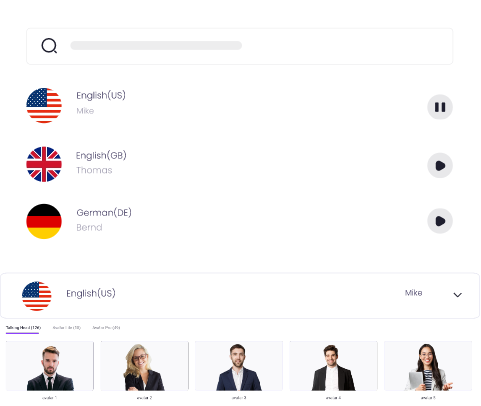
Create Text-to-Speech AI Voices - FREE
Make natural voice text to speech in various languages, accents, and ethnicities. Try it free now!
Key Feature
- Sophisticated linguistic models that effectively manage Cantonese’s nine tones.
- Option to choose between regional accents (Hong Kong vs. Guangzhou) and different levels of formality.
- Tone visualization features to guide learners’ pronunciation.
Pros
- Most linguistically accurate Cantonese TTS
- Proper handling of all 9 Cantonese tones
- Regional accent customization (HK/Guangzhou)
Cons
- Free version limited (500 chars/day)
- Requires technical understanding for API
Pricing:
- Free tier: 500 characters per day
- Premium: $7.99/month (unlimited characters)
- Enterprise: Custom pricing for API access
How to Use:
Step 1. Create a free account on Cantonese.AI
Step 2. Paste your text into the input field
Step 3. Select your preferred dialect and voice characteristics
Step 4. Generate and preview the audio
Step 5. Download as MP3 or use the API for integration
-
ReadSpeaker: Enhanced AI Cantonese TTS for Accessibility & Learning

ReadSpeaker provides enterprise-grade Cantonese text to speech solutions with a focus on accessibility and education. ReadSpeaker makes tools for institutions, unlike text to speech Cantonese consumer tools. Their AI Cantonese voice technology is used in e-learning platforms, public announcement technology, and translate Chinese audio for blind users.
Key Feature
- High-grade speech engine optimized for education.
- Multiple voice options (male/female, different age ranges).
- Seamless integration with websites and mobile apps via API.
- It syncs text with audio for a more engaging study.
Pros
- Most accurate Cantonese pronunciation for formal contexts
- Reliable uptime and enterprise-level support
- Excellent for educational institutions and public services
Cons
- No free tier available
- Requires technical knowledge for full integration
Pricing:
|
Plan
|
Target Users
|
Starting Price
|
|
Edu
|
Schools/Universities
|
$500/year
|
|
Business
|
Corporations
|
$1,200/year
|
|
Enterprise
|
Large Organizations
|
Custom quote
|
How to Use:
Step 1. Contact ReadSpeaker for API documentation
Step 2. Choose integration method (web, mobile, or LMS plugin)
Step 3. Configure Cantonese voice preferences
Step 4. Implement text highlighting functionality if needed
Step 5. Test with sample Cantonese content
-
Narakeet: Fast, Affordable, Realistic Online Cantonese Text to Speech

Narakeet offers straightforward text to speech Cantonese conversion with pay-as-you-go pricing. This no-frills solution is perfect for users who need quick text to speech Cantonese free conversions without complex features. Narakeet processes scripts in seconds and delivers natural-sounding audio files.
Key Feature
- Instant conversion of text to MP3 audio
- Support for Cantonese characters and romanization
- Batch processing of multiple files
- Simple API for developers
Pros
- Fastest processing time (under 30 seconds)
- No subscription required
- Clean, intuitive interface
Cons
- Limited voice customization
- Basic audio quality compared to AI solutions
Pricing Structure:
- $0.20 per minute of generated audio
- Volume discounts available for 100+ minutes
How to Use:
Step 1. Upload text file or enter script directly
Step 2. Select "Chinese (Cantonese)" from language menu
Step 3. Choose preferred voice gender
Step 4. Process and download MP3
Step 5. Use API for automated workflows if needed
-
Speechactors: High-Quality Traditional Cantonese TTS, No Limits

Speechactors provides unlimited text to speech Cantonese free conversions with surprisingly good quality. This hidden gem in the Chinese text to speech market offers completely unrestricted usage, making it ideal for high-volume needs. The platform specializes in traditional Cantonese characters.
Key Feature
- True unlimited free conversions
- Traditional Chinese character support
- Adjustable speech rate and pitch
- Direct sharing options
Pros
- No hidden limits or registration required
- Faithful to Hong Kong Cantonese standards
- Simple enough for beginners
Cons
- Voices sound slightly synthetic
- No advanced editing features
Pricing: 100% free with optional donations
How to Use:
Step 1. Visit Speechactors website
Step 2. Paste or type Cantonese text
Step 3. Click "Generate Speech"
Step 4. Playback and download audio
-
VEED's AI Speech-to-Text: Transcribe Cantonese Speech to Text

This one is something different from the previous 5 tools. VEED specializes in reverse conversion with its Cantonese speech to text technology. While most tools focus on text to speech Cantonese, VEED solves the opposite problem, converting spoken Cantonese into accurate written text. This is invaluable for interviews, meetings, and media production.
Key Feature
- 95%+ accuracy for clear recordings
- Timestamp generation
- Speaker identification
- Built-in video editor
Pros
- Most accurate Cantonese transcription available
- Useful for journalists and researchers
- Integrates with video editing workflow
Cons
- Free version has 30-minute limit
- Requires clean audio for best results
Pricing:
Free: $0 for 30 Mins/Month
Basic: $18/Month for 5 Hours
Pros: $30/Month unlimited time
How to Use:
Step 1. Upload audio/video file
Step 2. Select "Cantonese" as language
Step 3. Run auto-transcription
Step 4. Edit text with built-in tools
Step 5. Export subtitles or text document
Conclusion
Cantonese text to speech technology helps to transform written Cantonese content into spoken Cantonese content. This technology is very useful for content creators. Whatever your aim, study, business or project, this set of tools makes it easier to get through the challenges of Cantonese tones and pronunciation.
Vidnoz AI combines with Thai Voice to create interesting videos suitable for YouTubers, Teachers and Marketers or anyone looking to enhance their content.
Depending on your needs, explore different tools and open up new possibilities in Cantonese. Try Vidnoz AI today and see how easy it is to convert Cantonese text to speech!




![Best 6 Apps to Make Photo Talk: Make Your Pics Speak Instantly [2026]](https://www.vidnoz.com/bimg/best-app-to-make-photo-talk.webp)
![AI Dark Fantasy Art Trends, Process & Tools You Must Know [Ultimate Guide]](https://www.vidnoz.com/bimg/ai-dark-fantasy-art.webp)

![6 Panorama Photo Makers Online: Pan Around the World Easily! [Need-Based Review]](https://www.vidnoz.com/bimg/panorama-photo-makers-online.webp)